Personal Writing History

Writing has always been a huge part of my life, writing is all around from making a simple note in your phone, to writing an essay, or writing in your planner. Writing helps me stay on top of school work and helps me improve my voice and everyday talking. I believe practicing writing is the number one to make yourself sound more intelligent and credible.

I started writing when I was about four years old if I remember correctly, my mom taught me how to write and read at a young age to try and prepare me for school. I had such a hard time learning at first but like everyone says practice makes perfect. Nobody is good at something they try for the first time and there is always room for improvement. I’ve been writing for 16 years and I still have a lot of room for improvement!

My favorite old English professor from last semester hands down has been my most favorite English teacher because of how literate, enthusiastic, and form of teaching made him a very thorough and logical man. He was a English major all through college and wound up becoming a lawyer. Being a lawyer really showed him how to be very precise and on point when speaking, which then led to showing me; his students the way to make your self sound clear and accurate.

I plan on extending my writing knowledge in the future by always writing a page a day in a notebook about how i felt that day, what i got done, and how I can improve to make tomorrow an even better day. Writing doesn’t always have to be something in a book put out by a publisher. To me writing is anything that involves a pencil and paper, anything that can give you extra practice to always advancing your writing capabilities to the next level. There is no end to the knowledge of writing which is a great reason why many people love writing in their everyday lives.
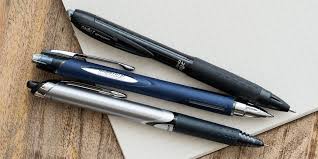
Every day I have and use writing tools on me or use my writing tools in my office at home. My daily writing tools consist of a 0.7 lead lead mechanical pencil, bic fine tip pen, a yellow and pink highlighter, and five-star plastic cover 1 subject notebooks. I prefer these products because to me they look the cleanest and make my handwriting look the best. At my home office i have the same materials plus a few more that I don’s use all the time such as a stapler, 3 prong hole punch, and white out. I still use these products but definitely don’t use them as much as my other supplies! The next writing I want to purchase is an erasable pen, I love using pens in my writing but I always tend to make a mistake and can’t erase it.
A great tool I use in writing is http://www.owl.purdue.edu, it’s a website that shows you how to make MLA format essays, APA format essays, and even how to make proper citation. I believe this can be a great help to my classmates who need practice on formatting and properly executing a perfect essay. Owl Purdue has helped me so much in the past and still till this day I use it when I stumble upon a writing problem. I highly recommend this website as a tool to any writing student!

My most effective way of learning about writing is by reading a writing that is an example to really show me what needs to be done and using those examples to help me produce my writing and ideas. Writing is also something that can be inspiring to other and I use the writing I read as inspiration that is needed for my text. Not exactly copying the original writers style but by using ways of approaching a question, formatting, and method of getting a point across. Writing has a million different types of ways of explaining that criteria and I am interested in there as many as my little brain can handle!
Blog Post 1: Ins and Outs of Realization

Many people act different and think different then others, people have different beliefs, morals, and motivation. It is common for a person to be mislead by something they saw or heard giving them a certain perception on a topic. In this writing “Media Campaigns and the Perception of Reality” by Rajiv N. Rimal they go over how media has an impact and the ways people take in what is being told in media campaigns such as radio shows, commercials, or television shows. Everywhere around you there is some type of message trying to change the way that you think or put you on to something new.

Media tries to set the standards of normalcy, political views, health problems, and so many more topics; but not everybody takes the same effect from a campaign as some will. People may completely disregard the campaign, over estimate the campaign, or have a misperception of the campaign. A good example of media making the normalcy in the world is cell phones. A few decades ago nobody even knew what a cell phone was, then the first phone came out as a huge brick that could only be used to make calls, then as technology advanced you started seeing these touch screen phones that can surf the web,text, play games on and so many more things everywhere; and I can almost guarantee whoever is reading this has a smart phone. My point is due to seeing almost everybody from your grandma to a 4th grader having this phone it makes you want it even more.

When somebody thinks that the media has no control over them and only other people is something called 3rd person effect. The third person effect can lead people into changing their interactions with people who they assume have been changed by media. They tend to believe they are not like the person who got “changed” by media anymore so they are no longer alike and eventually take different routes through life. Personally, I believe sometimes not letting media change you can lead you to a path of loneliness by feeling internally behind then others.

It is a proven fact then when great or popular people stand with others it may attract a bigger crowd to follow their beliefs or topic. Making someone perceive something is all a mind game by controlling how they think and trying to motivate them to believe in what you think, whether its right or wrong. Politics is a great example of this, you go to 5 different new stations about government issues, health issues, or any other issue dealing with America you will most likely have different answers or different facts coming from the other new channels depending on if the station is a republican or liberal sided channel. Both parties have different beliefs and want to pursue you into believing with them. But how do we know what one is right? Many situations like this people are ignorant to what they believe in, and I think it’s because each side tries to give the perception that they are better then they mean and promise more than given. The point is they still successfully made the perception on most people to make them conform in their beliefs.

They Say, I Say Blog 1

Chapter 1 :

In the chapter Graff and Birkenstein review over an academic conference with Dr.X, a sociologist. They talk about how Dr. X’s arguments weren’t so clear to most readers and how he would counter-act when he was questioned. Also, they go into how Dr. X’s work didn’t sound fairly confident and the point of his speech didn’t have a certain point given. They enlighten you on how to start a good argument off and not lose readers interests by evenly spacing details out. They mention that to start off you must give shed some light into the main point in the beginning then lead into the specific details as you go on. the authors also tell you how to respond to questions about ones arguments properly by stated your side of the topic and and respond to it as one. Doing all this will give your writings a more effective and enlightening outlook.

I Learned: From this chapter I learned that you can just indulge your audience in all the details you plan on talking about too early or you’ll lose their attention. I also learned, that it is better to let the suspense build up to fully engage your audience.

Chapter 2:

In Chapter 2 , “Her Point Is” by Graff and Birkenstein they go over how to properly make a summary while having respect to other and validly getting your point across being credible. How to make a summary using your words and coming with a strong confident reading within your words while bringing a strong clear point. Also teaches you how not to use strong exaggeration from the original writing to summarize making you look one-sided or biased. A good summary holds the main points from the original writing and putting the advice given into your own words making it credible. They also dig into how to counter questions in arguments by trying to tell you that you have to go use what the question is asking as your go to ammo to answering the question and not going off topic. Also, make sure that you completely understand what they are asking so you can reply to the argument or writing without skipping any important facts or misinterpret.

I Learned: I learned that there is a such thing as “the closest cliche system” which is when a writer doesn’t gather enough facts in a summary which leads to opposite views that the writing was originally intended for. Also I learned that using more thought out verbs can help gain a reader’s interest more and can lead to a more effective writing and make a better reenactment of what really happened. Example: “He was surprised when ____” isn’t going to attract you as much as “His mouth dropped of excitement when____”

Chapter 3:

A way to get immense credibility in a argument is to use quotes. Chapter 3 goes over proper quoting and showed me how to properly quote. They do so by going over that under quoting is a common thing that leads to throwing the listeners off and not connect the quote to your argument. Some quotes the listeners might not understand so you have will most likely have to give an explanation right after the quote is said to inform the listeners; although it is still possible to over explain your quote. You must know what your quote means, when to use it, and how to use it. It is key to make sure they support your argument. Also, dangling quotes are a common thing where a quote is made with no explanation and the audience can’t put together the connection.

I Learned: The templates of quoting helped me by showing you want the intro of the quote to be short and forward. Example: ” Dr. Suess stated an idea once when..” (bad) “Dr. Suess stated that….” (good), I also learned that it is possible to over explain a quote and you have to know what quote needs deep explaining and what quote doesn’t.

My Summoning

Hello, I’m Alex Milewski, you can call me Alex

I am majoring in Applied Sciences, for welding. I am very fascinated by making things with my own hands and watching things I create be put into use!

This is my first year 2nd semester in College and i graduated high school in 2017.

Once I am done with college and have my associates and NCCER certificates I would like to work in the welder’s union for some time then the dream is to open up my own custom fabrication shop for anything and everything you need made from roll cages in cars to a metal desk for a office

I have a few hobbies I like to do such as video games and I am really into drifting and building drift cars for street and track use.

Personally, I love English, it’s a way to express what you’re thinking and get creative. My favorite type of writings are argumentative writing. I find those to be the most interesting

Introduce Yourself (Example Post)

This is an example post, originally published as part of Blogging University. Enroll in one of our ten programs, and start your blog right.

You’re going to publish a post today. Don’t worry about how your blog looks. Don’t worry if you haven’t given it a name yet, or you’re feeling overwhelmed. Just click the “New Post” button, and tell us why you’re here.

Why do this?

  • Because it gives new readers context. What are you about? Why should they read your blog?
  • Because it will help you focus you own ideas about your blog and what you’d like to do with it.

The post can be short or long, a personal intro to your life or a bloggy mission statement, a manifesto for the future or a simple outline of your the types of things you hope to publish.

To help you get started, here are a few questions:

  • Why are you blogging publicly, rather than keeping a personal journal?
  • What topics do you think you’ll write about?
  • Who would you love to connect with via your blog?
  • If you blog successfully throughout the next year, what would you hope to have accomplished?

You’re not locked into any of this; one of the wonderful things about blogs is how they constantly evolve as we learn, grow, and interact with one another — but it’s good to know where and why you started, and articulating your goals may just give you a few other post ideas.

Can’t think how to get started? Just write the first thing that pops into your head. Anne Lamott, author of a book on writing we love, says that you need to give yourself permission to write a “crappy first draft”. Anne makes a great point — just start writing, and worry about editing it later.

When you’re ready to publish, give your post three to five tags that describe your blog’s focus — writing, photography, fiction, parenting, food, cars, movies, sports, whatever. These tags will help others who care about your topics find you in the Reader. Make sure one of the tags is “zerotohero,” so other new bloggers can find you, too.

Design a site like this with WordPress.com
Get started